Original Hungarian text translated into English
Original Hungarian text translated into English
Description
The church in Cserépváralja is regarded as a work of outstanding importance, both within the oeuvre of its architect, László Csaba, and in the history of Hungarian architecture. The church was completed in 1961 with the active involvement of the village community. It is the first truly modern church of the post-war period. Over the 60 years since then, the condition of the church has deteriorated significantly. Its renovation
the Hungarian Government in 2023. In addition to its architectural merits, the church’s significance is enhanced by its artistic value. László Csaba enlisted two contemporary artists of the time who were highly regarded and widely recognised, Béla Kondor and József Somogyi, to contribute to the design of the sanctuary. Kondor created the door of the tabernacle, whilst Somogyi created the corpus.
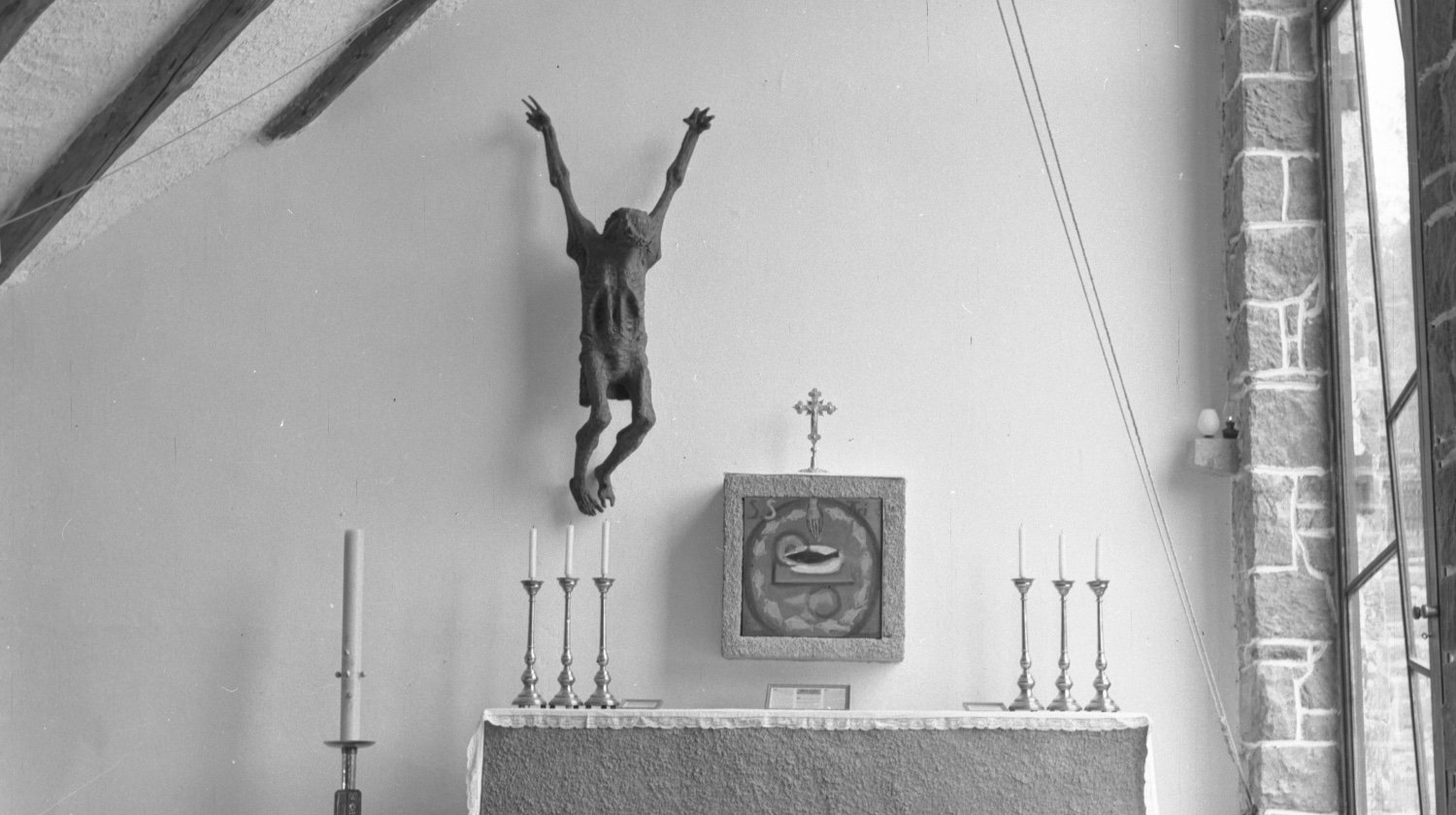
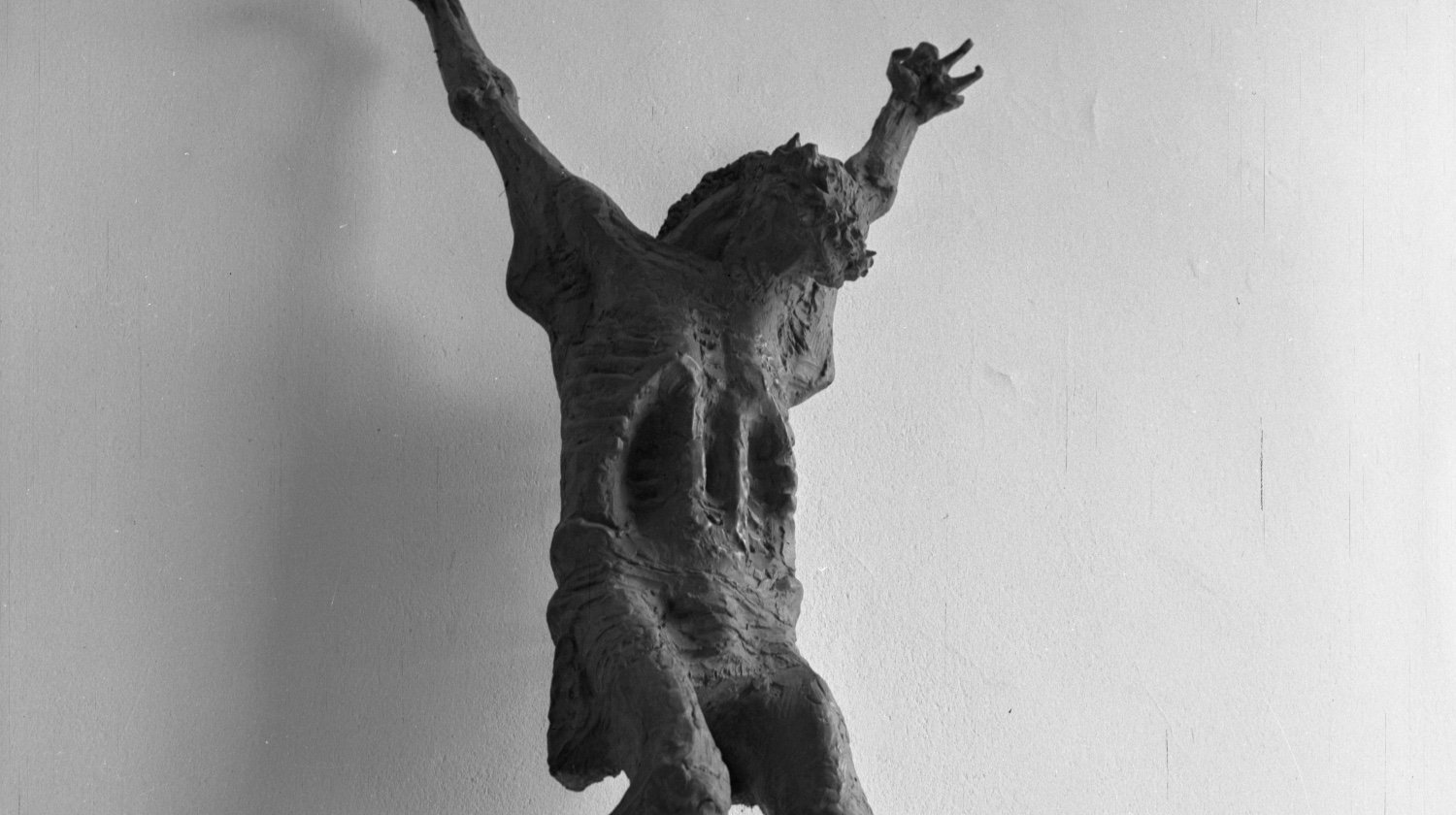
The corpus is an early example of Somogyi’s highly expressive depictions, which, without the cross, speak of the agony of self-sacrifice through the mere sight of the body. As the parish could not afford to cast it in bronze, Somogyi donated the plaster model to the church. The sculpture was fixed to the wall using hooks embedded in the back, allowing the limbs to extend freely into the air – the corpus thus appeared to float against the white plaster. However, the congregation reacted with hostility to the works; the tabernacle door was repainted, and the corpus was moved to the church vestibule. Consequently, László Csaba travelled to Cserépváralja and, in consultation with the parish priest at the time, removed the works.
The architectural renovation, as well as the openness of the locals and the heirs, makes it possible not only for the church to be restored to its original condition, but also for the tabernacle door and the corpus to be returned to their original places. The painting had previously been restored at László Csaba’s own expense; the architect’s heirs had preserved it and, upon hearing of the building’s restoration, initiated the return of the painting to its original location.
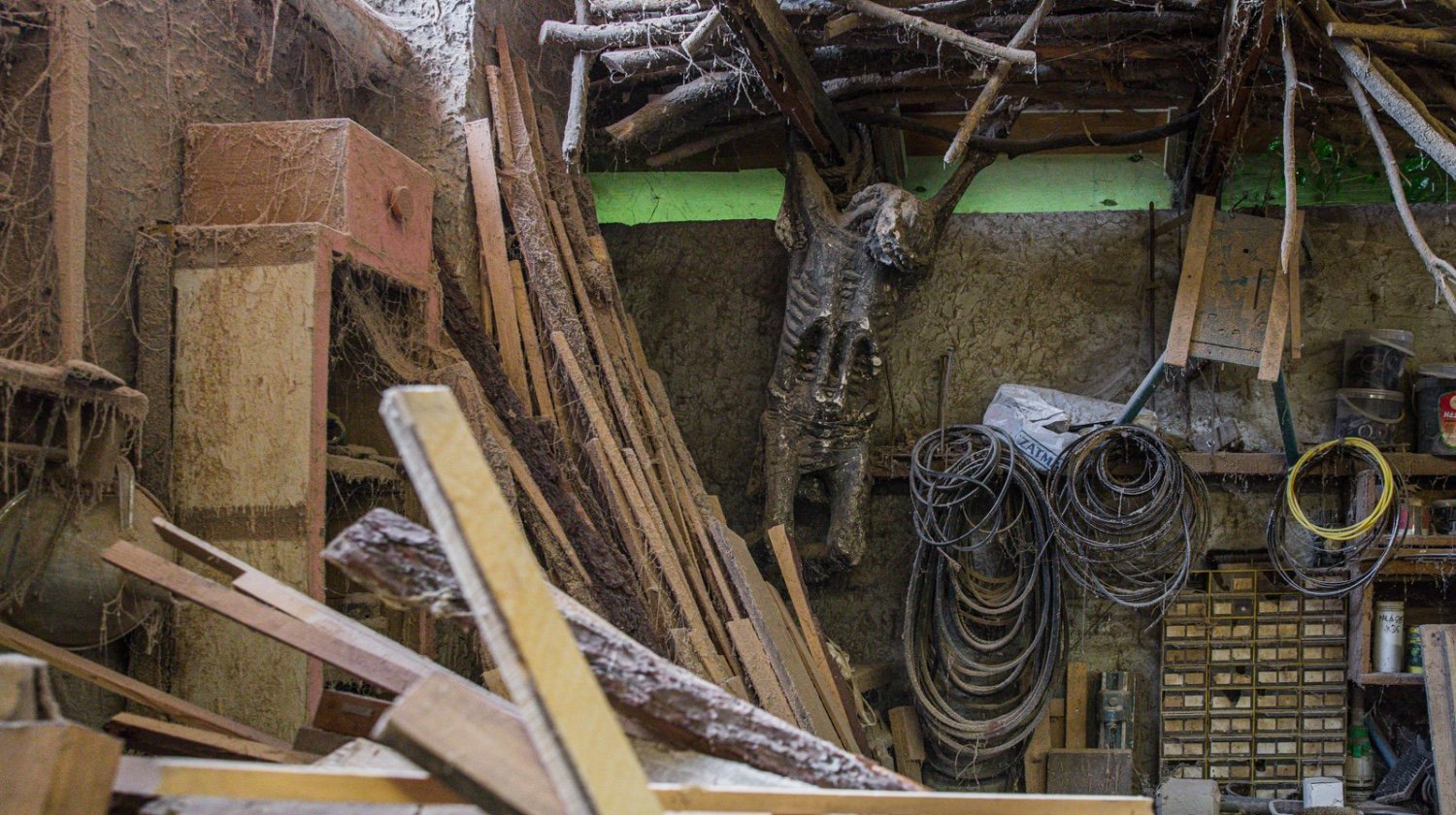
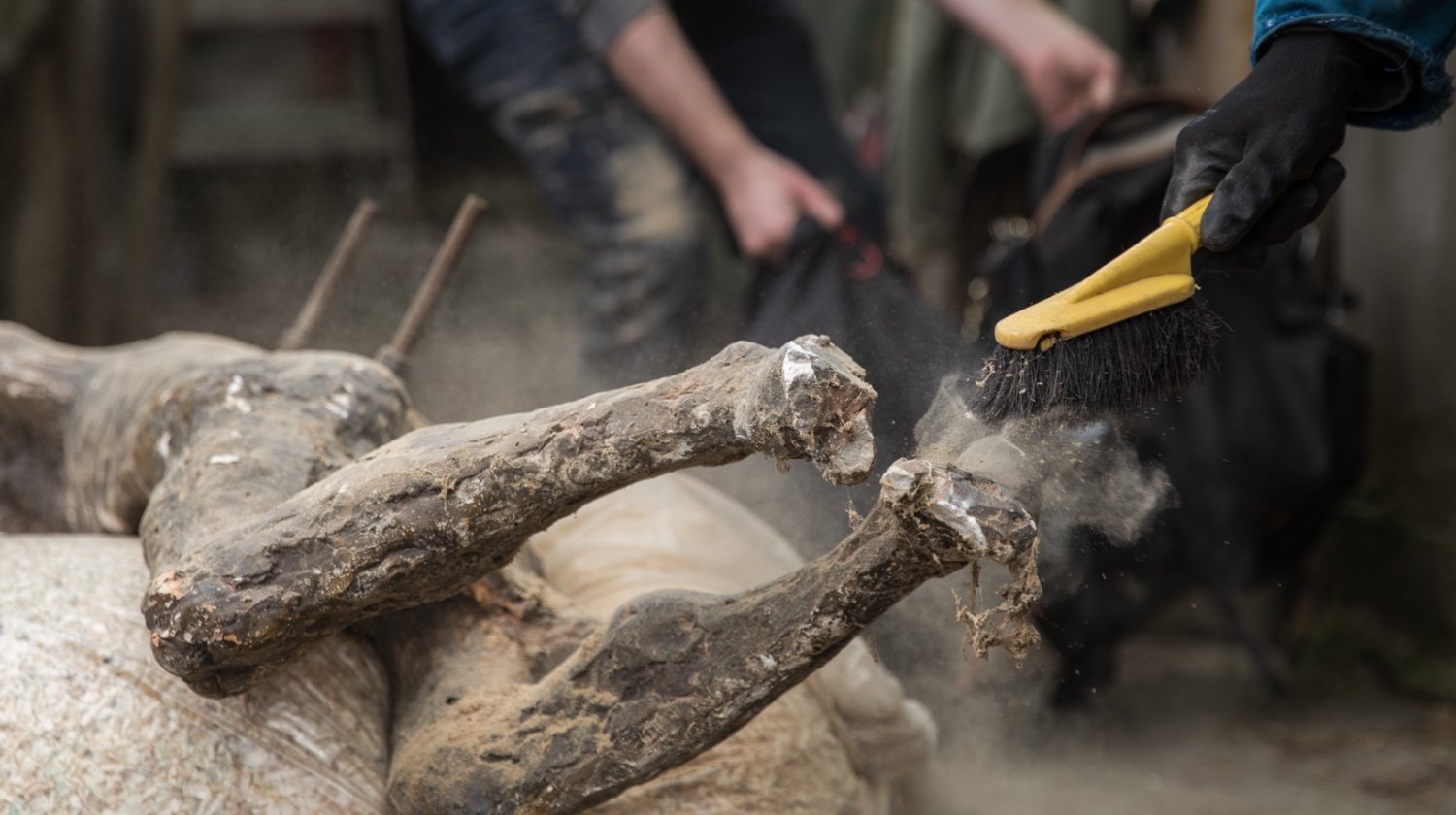
The statue was found in 2023 in a carpenter’s workshop, in the possession of the heirs. Storing it there saved it from destruction, but it was damaged in several places and had deteriorated significantly. Sculptor János Meszlényi, a pupil of Somogyi, made recommendations for identifying the damage and assessing restoration options. Both the congregation and the heirs would be delighted if the corpus could also be returned to its original place next to the tabernacle door, but its current condition does not allow for this. The construction work has completely exhausted the state grant, and the money saved by the local community was primarily spent on the manufacture of the church’s furnishings
. The architects (Partizan Architecture: Zoltán Major, Péter Müllner) and contributors to the restoration are therefore seeking assistance so that this unique work by József Somogyi may once again be restored to its original splendour and condition.
The church has been beautifully and sensitively renovated. This renovation should be a model for the way buildings of this period are treated.