Enhance Your 3D Projects with Multi Color Printing Technolog
Enhance Your 3D Projects with Multi Color Printing Technolog
Lýsingu
Multi-color 3D printing has fundamentally reshaped how professional designers approach prototyping, product development, and creative production. What once required painstaking hand-painting or complex assembly of separately printed components can now be achieved in a single, streamlined print cycle. For engineers, architects, and artists alike, the challenge of producing vibrant, detail-rich prototypes without extensive post-processing has long been a bottleneck in creative workflows. The multi color 3d printer eliminates this friction, delivering production-ready models with precise color placement and seamless transitions directly off the build plate.
This technology represents more than a convenience upgrade—it's a competitive advantage. In the following sections, we explore the hardware innovations driving this revolution, including QIDI Box features that optimize filament management, aluminum bed systems for thermal consistency, and hardened steel extrusion components built for longevity. We also provide a comparative filament analysis to help you match material properties to specific project demands, along with a practical implementation guide designed for professionals ready to integrate multi-color capability into their daily operations.
The Evolution and Core Advantages of Multi-Color 3D PrintingThe journey from single-color extrusion to sophisticated multi-color capability reflects decades of iterative engineering breakthroughs. Early FDM printers could only deposit one material per build, forcing designers to print components separately and assemble them by hand—a process prone to alignment errors and inconsistent surface finishes. The introduction of dual-extrusion systems marked an initial step forward, but true multi-color printing arrived with advanced filament management systems capable of handling four, eight, or even more colors within a single job.
This capability has proven transformative across professional sectors. Product designers now produce client-ready prototypes that communicate brand colors and material zones without explanation. Architects print detailed urban models with distinct zoning, landscaping, and structural elements visible at a glance. Artists and sculptors create exhibition pieces with gradient transitions and embedded visual narratives that were previously impossible without extensive hand-finishing. Beyond aesthetics, multi-color printing improves prototyping accuracy by visually distinguishing functional zones—such as rigid versus flexible regions—directly on the physical model. For businesses operating in competitive markets, the ability to present polished, multi-hued prototypes in hours rather than days translates into faster iteration cycles, stronger client confidence, and a measurable edge over competitors still relying on monochrome output or manual post-processing workflows.
Essential Hardware Features for Professional Multi-Color 3D PrintersAchieving consistent, publication-quality multi-color output demands more than capable software—it requires hardware engineered specifically for the complexities of managing multiple filament streams simultaneously. Professional designers evaluating a multi-color 3D printer should prioritize three interconnected systems that collectively determine print reliability, surface quality, and long-term operational value.
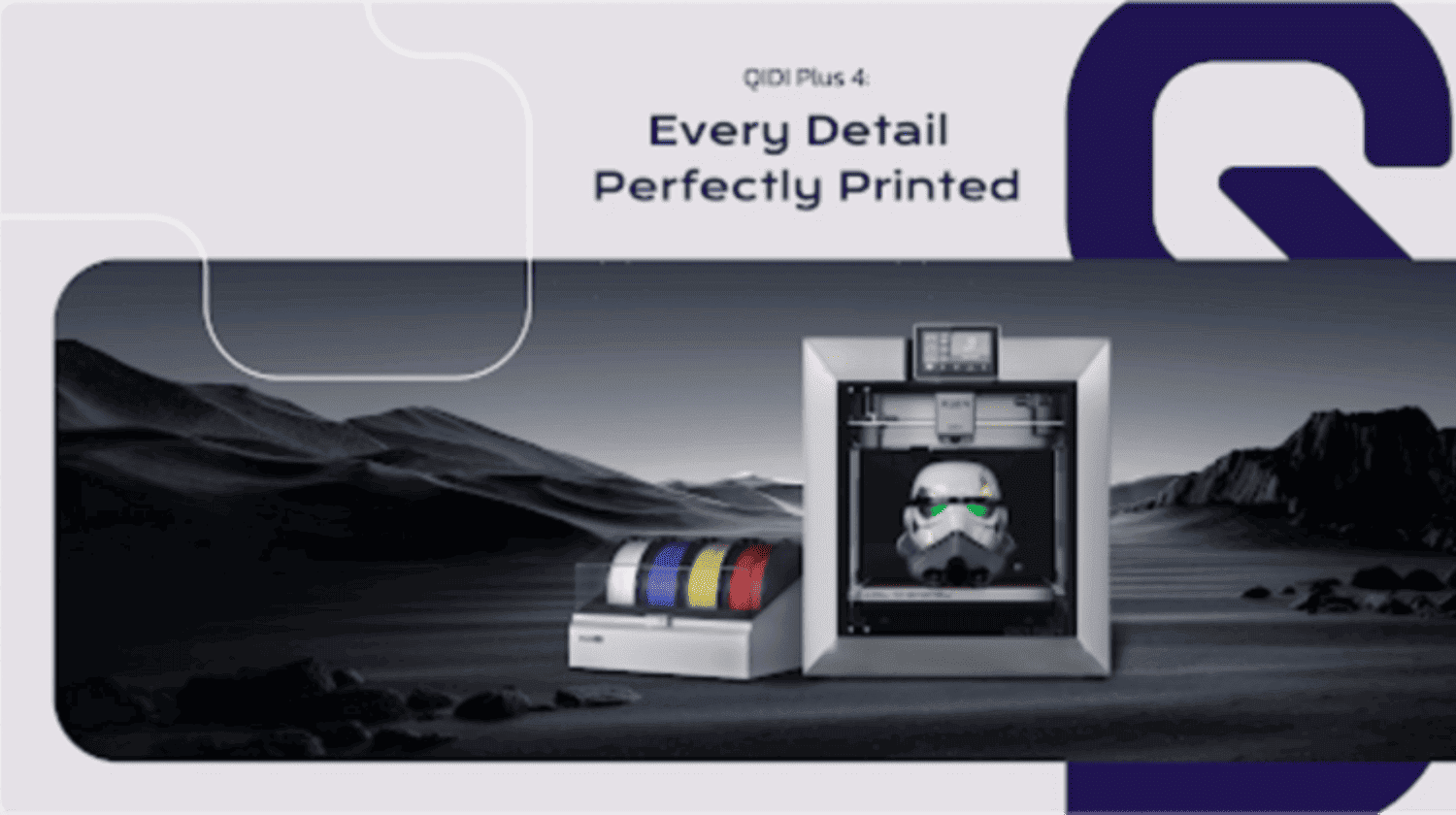
QIDI Box Features: Optimizing Print Quality and EfficiencyThe QIDI Tech QIDI Box system serves as the central filament management hub, orchestrating smooth transitions between multiple color channels during a single build. By maintaining controlled tension and routing paths for each filament spool, it minimizes tangling and ensures precise retraction timing during color switches. The enclosed printing environment further stabilizes ambient temperature around the build volume, reducing warping on large multi-color components and maintaining dimensional accuracy across layers. For professionals producing client-facing prototypes, these QIDI Box features translate directly into fewer failed prints and more predictable color boundaries.
Aluminum Bed and Stable Feeding System: Foundations for ReliabilityAn aluminum bed delivers uniform heat distribution across the entire build surface, eliminating cold spots that cause corner lifting or uneven first-layer adhesion—issues that compound dramatically in multi-hour, multi-color jobs. Paired with this thermal foundation, the stable feeding system maintains consistent filament pressure regardless of which color channel is active. This prevents the under-extrusion artifacts and inconsistent line widths that plague lesser systems during rapid color transitions, ensuring each deposited strand matches its neighbors in dimension and density throughout complex prints.
Hardened Steel Extrusion: Durability for Demanding ProjectsMulti-color workflows often involve composite or filled filaments—carbon fiber-infused materials, glow-in-the-dark additives, or metallic blends—that rapidly erode standard brass nozzles. Hardened steel extrusion components resist this abrasion, maintaining tight bore tolerances over thousands of print hours. This durability directly preserves the precision required for clean color boundaries; as a nozzle wears, line width becomes unpredictable, causing color bleeding between adjacent zones. For studios running production schedules, hardened steel means consistent output quality without frequent nozzle replacements interrupting workflow.
Comparative Analysis of Filaments for Multi-Color Printing ApplicationsSelecting the right filament for multi-color projects requires balancing visual performance against mechanical demands. Not every material handles color transitions with equal grace, and the wrong choice can undermine hours of careful design preparation. Understanding how different polymers interact with multi-filament systems helps professionals make informed decisions that protect both print quality and hardware longevity.
Understanding Filament Properties: Color Fidelity, Strength, and FlexibilityThree properties dominate filament selection for multi-color work: color fidelity, inter-layer adhesion, and thermal stability. PLA excels in color vibrancy and fine detail reproduction, making it ideal for visual prototypes and architectural models where surface appearance matters most. Its low printing temperature also reduces thermal bleed between adjacent color zones. ABS offers superior impact resistance and heat tolerance, suiting functional prototypes that must endure handling or environmental stress—though its tendency to warp demands the controlled chamber environment that enclosed systems provide. PETG occupies a middle ground, delivering good mechanical strength with less warping than ABS while maintaining reasonable color clarity. Flexible TPU filaments enable multi-color prints with integrated soft-touch zones, though their elastic nature requires slower feed rates and careful retraction tuning during color switches to prevent stringing between regions.
Comparative Table: PLA, ABS, PETG, and Specialty FilamentsWhen planning multi-color builds, matching filament to application prevents costly reprints. PLA suits client presentation models, brand mockups, and detailed figurines where color accuracy is paramount. ABS serves engineering prototypes requiring snap-fit testing or thermal exposure. PETG works well for functional parts needing chemical resistance alongside visible color coding—such as laboratory fixtures or food-safe containers with color-differentiated zones. Specialty filaments like carbon fiber-filled or metallic blends deliver unique visual textures but demand hardened steel extrusion paths to prevent nozzle degradation over extended runs. When blending multiple filament types within a single print, maintaining compatible processing temperatures across all loaded colors prevents adhesion failures at transition boundaries. Professionals should test color-pair combinations on small calibration prints before committing to full-scale jobs, verifying that purge sequences adequately clear residual pigment and that transition towers capture waste material without contaminating the primary model surface.
Practical Solutions: Step-by-Step Guide to Implementing Multi-Color PrintingTransitioning from single-color workflows to full multi-color production requires deliberate preparation across software, hardware, and quality control stages. The following step-by-step approach helps professional designers avoid common pitfalls and achieve reliable, vibrant results from their first multi-color build onward.
Step 1: Design Preparation and Software SetupBegin by segmenting your 3D model into distinct color zones within your CAD environment, assigning each region a specific filament channel. Import the model into your slicer and configure purge tower dimensions to accommodate the number of color transitions per layer. Set retraction distances appropriate for your stable feeding system to prevent oozing during filament switches. Plan support structures in a contrasting color for easy identification and removal, and verify that transition sequences won't deposit waste material on visible surfaces.
Step 2: Printer Calibration and Hardware ChecksLevel the aluminum bed using a mesh-based probing routine to ensure uniform first-layer adhesion across the entire build surface. Confirm that each filament path through the QIDI Box feeds smoothly without excess friction by manually advancing each color channel. Run a temperature tower for every loaded filament to identify optimal extrusion temperatures, then verify nozzle condition—particularly if using abrasive specialty materials—to ensure hardened steel components maintain proper bore diameter for crisp color boundaries.
Step 3: Post-Processing and Quality AssuranceAfter printing, remove transition towers and support material carefully to preserve color edges. Light sanding with fine-grit paper smooths any visible layer lines at color boundaries. If color bleeding occurred, adjust purge volumes upward for future prints. Apply a clear sealant coat to unify surface sheen across different filament types and protect pigment vibrancy during handling or display.
Multi-Color 3D Printing as a Professional Competitive AdvantageMulti-color 3D printer technology has moved beyond novelty into essential professional infrastructure, enabling designers to produce complex, visually compelling prototypes and finished pieces without the delays of manual painting or multi-part assembly. The hardware innovations discussed—QIDI Tech's QIDI Box features for seamless filament management, aluminum bed systems ensuring thermal uniformity, and hardened steel extrusion components built to withstand abrasive specialty materials—collectively form a reliable foundation for demanding production environments. These systems work in concert to deliver clean color boundaries, consistent extrusion quality, and long-term operational stability that professionals require.
Equally important is the thoughtful selection of filaments based on comparative analysis of mechanical properties, color fidelity, and processing compatibility. Matching the right polymer to each project's specific demands prevents wasted time and material while maximizing visual impact. As multi-color printing continues advancing toward higher color counts, faster transition speeds, and broader material compatibility, designers who integrate these capabilities now position themselves at the forefront of their fields. The convergence of intelligent hardware design and expanding material science ensures that multi-color 3D printing will remain a defining competitive advantage for studios committed to delivering exceptional work efficiently.