

Alkuperäinen Englanti teksti käännetty Suomalainen
Alkuperäinen Englanti teksti käännetty Suomalainen
Kuvaus
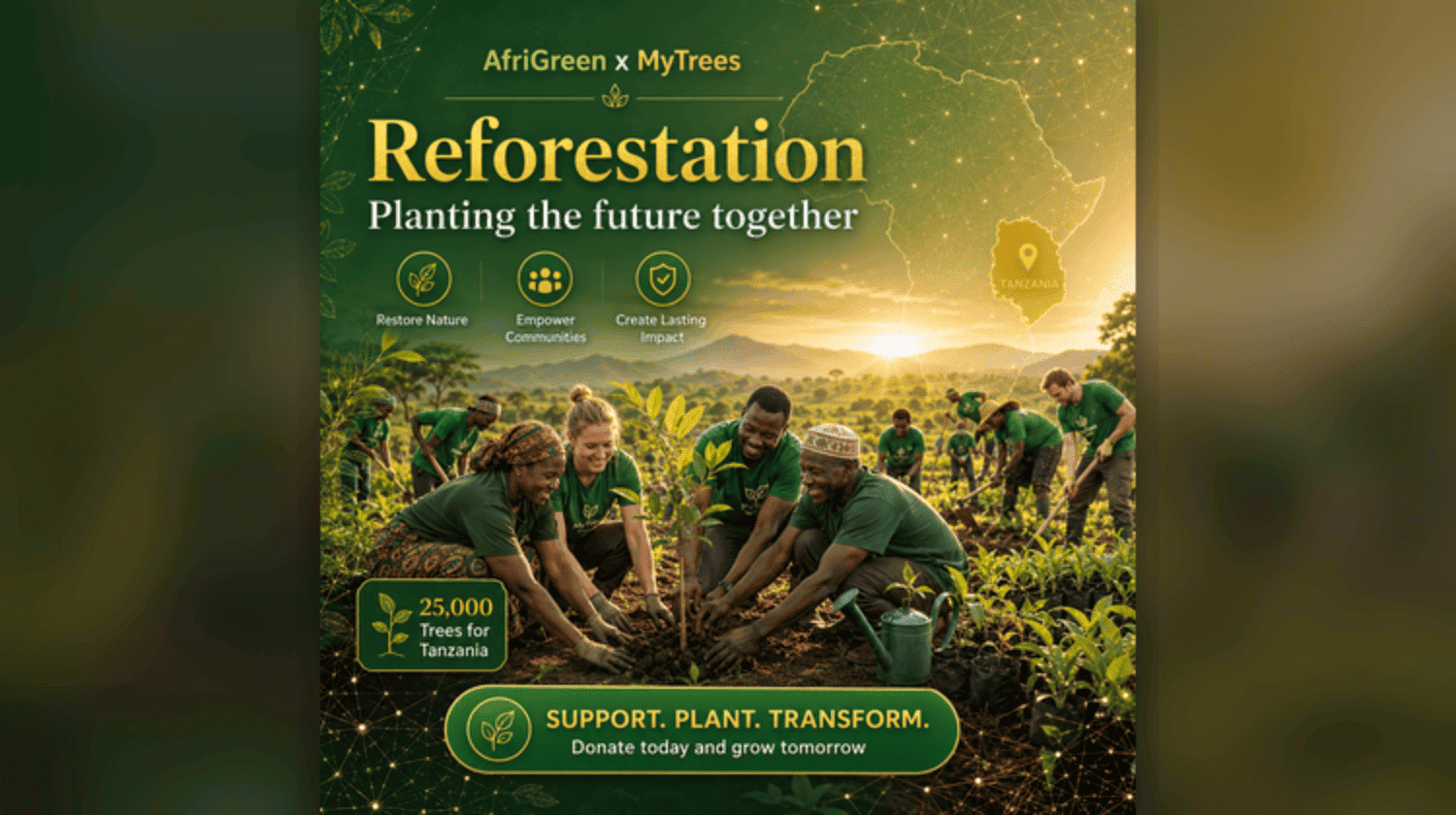
Plant trees. Restore land. Create jobs. Strengthen communities.
We are raising funds to finance the planting and early care of approximately 25,000 trees in Tanzania.
This campaign brings together the environmental vision of AfriGreen and the practical experience of MyTrees in Tanzania.
Our objective is not simply to plant seedlings and walk away. We want to help restore degraded land, improve soil and water retention, create paid work for local people and develop a transparent model of reforestation that can be expanded to other areas in the future.
AfriGreen is an environmental initiative being developed to connect:
- reforestation in Africa;
- local communities;
- transparent environmental financing;
- digital monitoring;
- blockchain technology;
- and future verified environmental impact.
The purpose of AfriGreen is to help direct capital toward tangible projects that create measurable value for nature and people.
Our long-term vision is to build a transparent ecosystem in which supporters can follow how environmental funding is transformed into planted trees, restored land and opportunities for local communities.
MyTreesMyTrees is not a new organisation created solely for this campaign.
Its agricultural history in Tanzania reaches back to 2012, when the first coffee trees were planted. The first coffee harvest followed in 2016. Today, the MyTrees coffee farm in the Mbeya region reports approximately 86,000 coffee trees, with up to 250 local workers involved during the harvest season.
My Trees Invest Tanzania Limited operates as a Tanzanian subsidiary of the Czech-based My Trees Holding SE. Its activities in Tanzania include sustainable agriculture, food processing, renewable-energy support, agro-tourism and CO2-sequestration initiatives. Its documented Tanzanian projects include coffee farming in the Songwe region, cashew farming in Kibiti, agriculture in Kyela and other community-oriented projects. Its website contains project posts dating back to at least 2019.
MyTrees also supports social initiatives in Rungungu village, including work connected with the local school and the development of healthcare facilities.
This means that the campaign is not beginning with only an idea. It builds on years of practical agricultural activity, local experience and relationships in Tanzania.
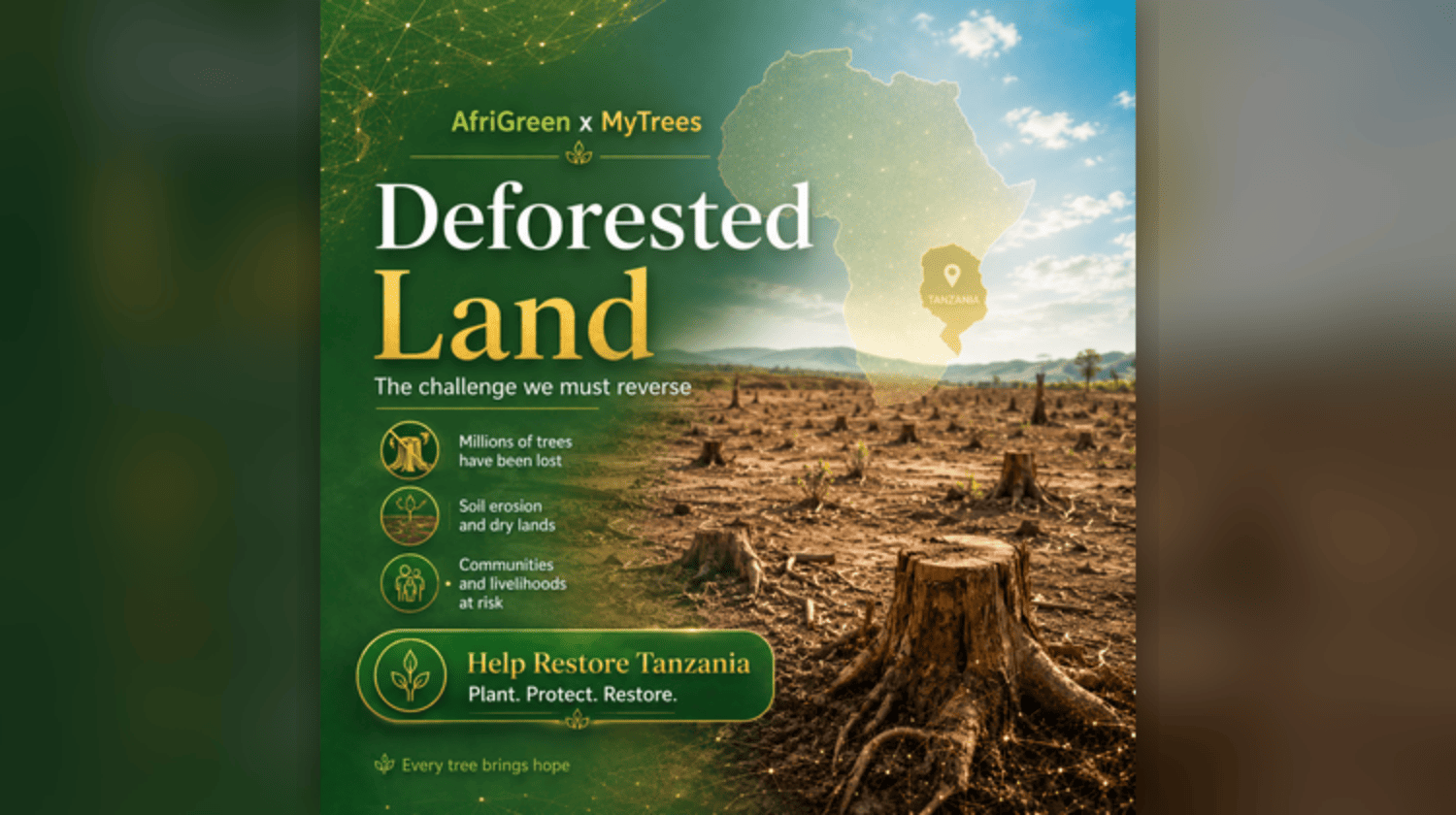
Tanzania is one of the most naturally diverse countries in Africa, but many areas face serious pressure from deforestation, land degradation, erosion and unsustainable land use.
The World Bank has identified rapid forest loss, degrading land resources and growing pressure on water resources as major environmental challenges for Tanzania.
The Food and Agriculture Organization of the United Nations also identifies deforestation and land degradation as threats to ecosystems, agricultural productivity and rural livelihoods in Tanzania. The country has committed to restoring millions of hectares of degraded land.
When trees disappear, the impact reaches far beyond the loss of greenery.
Deforestation can contribute to:
- soil erosion and declining soil fertility;
- reduced water infiltration;
- loss of biodiversity;
- hotter and drier local conditions;
- lower agricultural resilience;
- and fewer sustainable livelihood opportunities for rural communities.
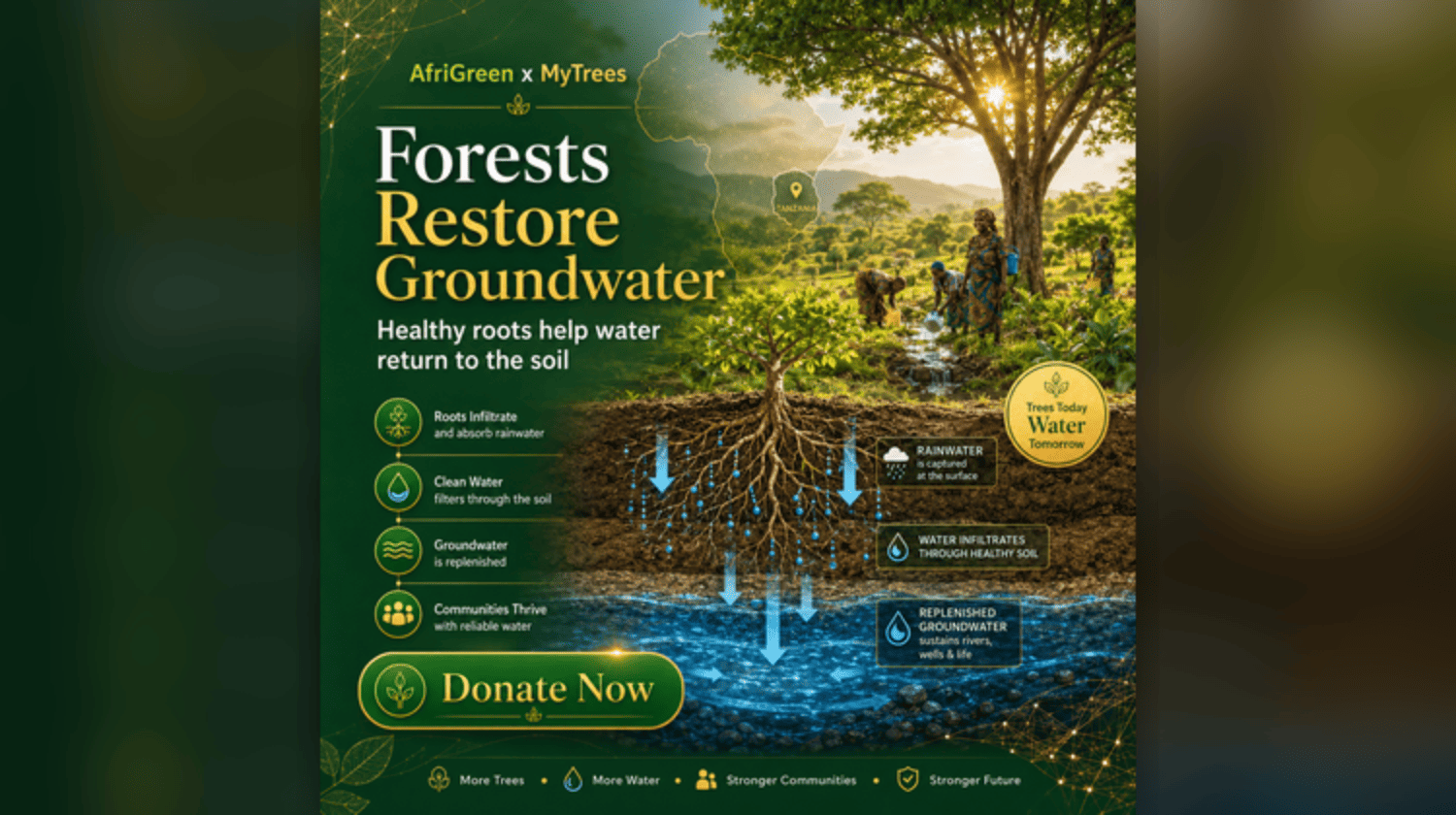
Restoring forests can help reverse these trends. Trees protect the soil, support biodiversity and help rainwater penetrate the ground rather than immediately running off the surface. Vegetation can therefore contribute to erosion control, water retention and groundwater recharge.
Our initial target is to finance the planting and establishment of approximately:
25,000 trees in TanzaniaThe trees will be selected according to local environmental conditions, land use, water availability and the needs of the participating communities.
Depending on the final planting area, the project may include a responsible combination of:
- suitable native and locally adapted trees;
- productive agroforestry trees;
- trees supporting soil restoration;
- shade and companion trees;
- fruit or nut-producing trees where appropriate;
- and species capable of supporting long-term biodiversity.
The final number of successfully established trees will depend on species selection, weather, local planting conditions, survival rates and the verified cost of implementation.
Our commitment is to report honestly on the number of seedlings purchased, trees planted and trees surviving during the monitoring period.
We believe that environmental projects must create benefits for both nature and people.
Planting trees should not be based on outside organisations arriving, completing a symbolic activity and leaving. Reforestation is sustainable only when local people are actively involved, treated as equal partners and fairly compensated for their work.
The project is therefore designed to support:
Environmental restorationTrees can help protect soil, improve water retention, reduce erosion and gradually restore biodiversity.
Paid local employmentLocal workers can participate in nursery preparation, land preparation, planting, watering, maintenance and monitoring.
Stronger communitiesAgroforestry and productive trees can contribute to food security, local income and more resilient rural economies.
Long-term careA planted seedling is only the beginning. Young trees require watering, protection, maintenance and replacement when necessary.
TransparencySupporters should be able to see how the funds were used and what was achieved.
The funds raised through this campaign will be used for verified costs connected with the preparation, planting and early establishment of approximately 25,000 trees.
The expected expenditure categories include:
1. Seedlings and nursery preparationPurchasing or producing healthy seedlings and preparing them for planting.
2. Land and soil preparationPreparing planting areas, creating planting holes, protecting vulnerable soil and organising the planting layout.
3. Local employmentPaying local workers involved in nursery work, planting, watering, maintenance and monitoring.
4. Transport and logisticsTransporting seedlings, equipment, water and workers to the planting locations.
5. Planting and initial carePlanting the trees, watering them and providing the necessary early-stage care.
6. Protection and maintenanceProtecting young trees from damage, managing vegetation around them and replacing seedlings that do not survive.
7. Monitoring and documentationRecording planting progress through photographs, videos, project updates, planting records and location information where feasible.
8. Project coordination and reportingCoordinating local activities, suppliers, workers and transparent reporting to campaign supporters.
The final allocation will reflect actual quotations, planting conditions and verified local costs.
If costs are lower than expected, the remaining funds will be used to plant and maintain additional trees or extend the monitoring and maintenance period.
We want contributors to follow the journey from donation to real-world impact.
We intend to publish campaign updates showing:
- preparation of the planting areas;
- delivery and preparation of seedlings;
- local teams involved in the project;
- photographs and videos from planting;
- the number of trees planted;
- the types of trees used;
- expenditure summaries;
- maintenance activities;
- and available information about tree survival.
Where technically and practically possible, AfriGreen will also explore the use of digital tools for recording and improving the transparency of the planting process.
This is a donation-based environmental campaign.
A contribution does not represent:
- the purchase of an AFRI token;
- an investment in AfriGreen or MyTrees;
- ownership in a company or project;
- a loan;
- a guaranteed financial return;
- a guaranteed carbon credit;
- or a promise of future profit.
No token, security, equity interest or financial product is being offered in exchange for a contribution through this campaign.
The purpose of the campaign is to finance real tree planting and related environmental and community activities in Tanzania.
The first 25,000 trees are intended to demonstrate what cooperation between environmental innovation, experienced local implementation and an international community of supporters can achieve.
Our broader ambition is to develop a scalable model that supports:
- restoration of degraded land;
- larger tree-planting programmes;
- responsible agroforestry;
- employment and fair income for local communities;
- improved soil and water conditions;
- biodiversity;
- transparent environmental reporting;
- and, where legally and technically possible, independently verified environmental benefits.
We believe technology should support real projects rather than replace them.
The real impact will be visible in the ground:
a planted tree, healthier soil, meaningful work and a stronger community.
Every contribution brings us closer to the first planting day.
Whether you contribute €5, €25, €100 or more, you become part of a project designed to create visible and lasting environmental impact.
If you are unable to contribute financially, sharing this campaign can be equally valuable. One share may reach the individual, company or organisation that helps us complete the entire planting target.
Thank you for believing that environmental restoration and community development can grow together.
Thank you for supporting AfriGreen and MyTrees.
Thank you for helping us plant the next 25,000 trees in Tanzania.