
Support My Search for Work Despite Disability Stigma
Support My Search for Work Despite Disability Stigma
Description
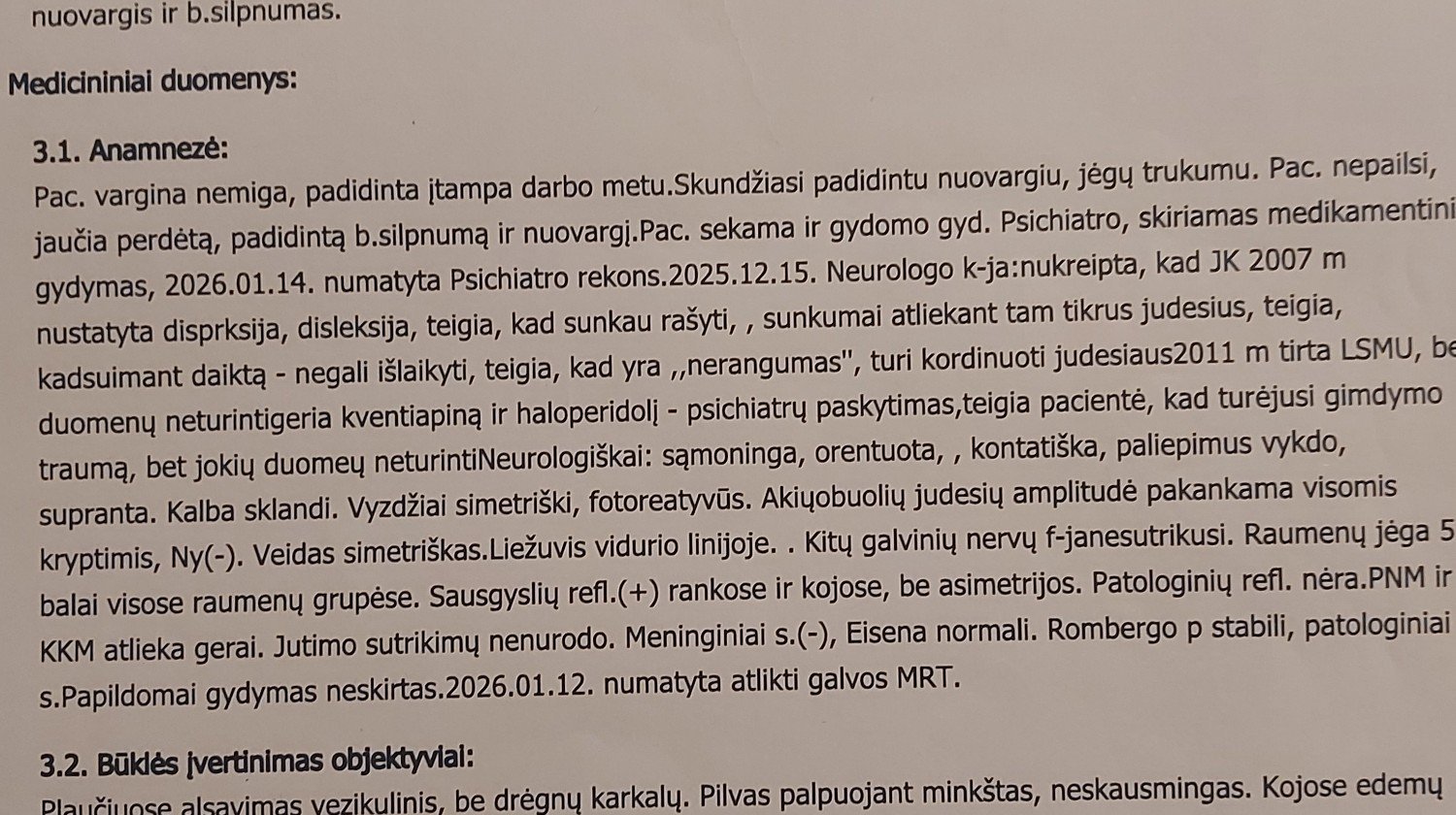
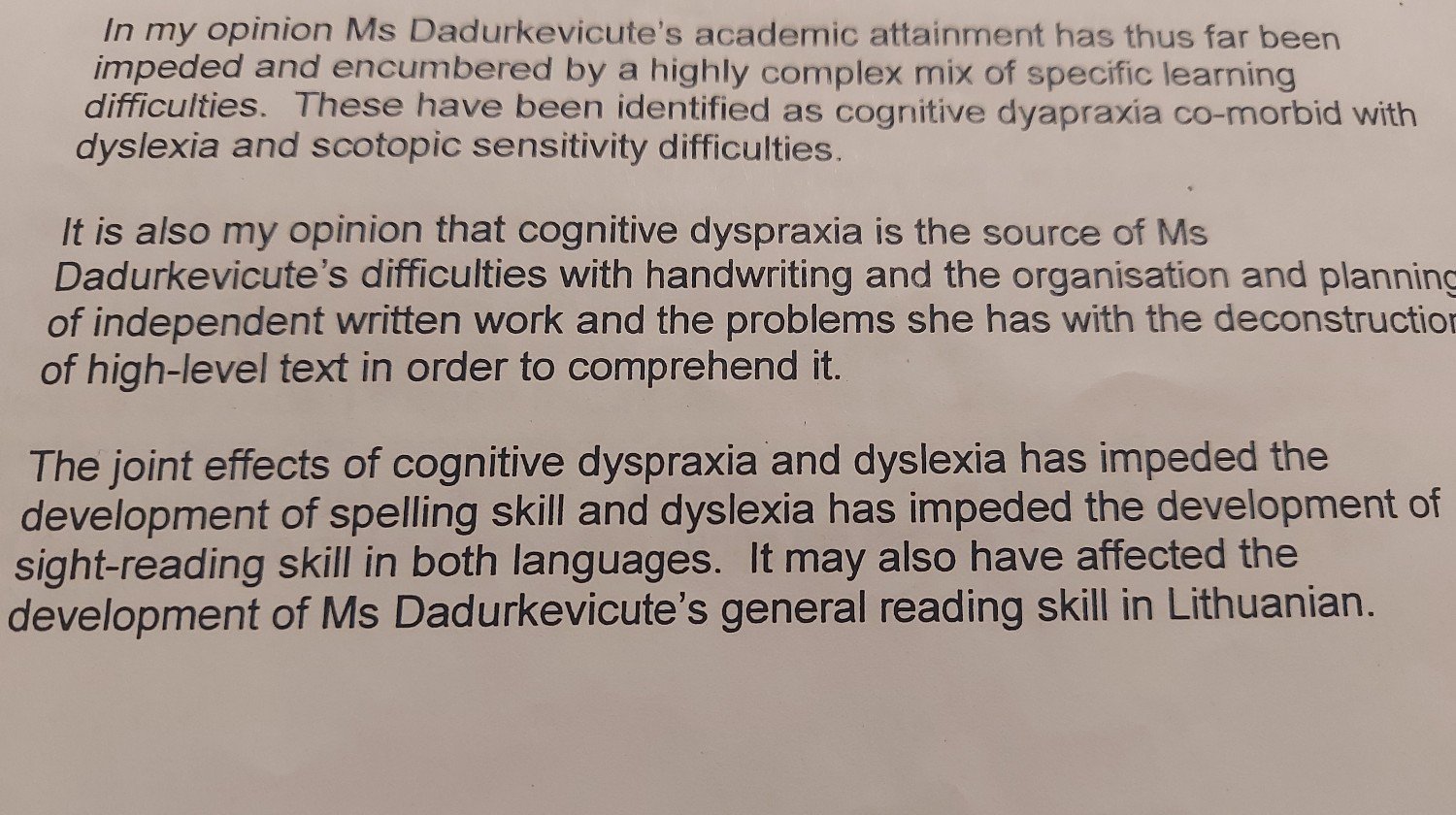
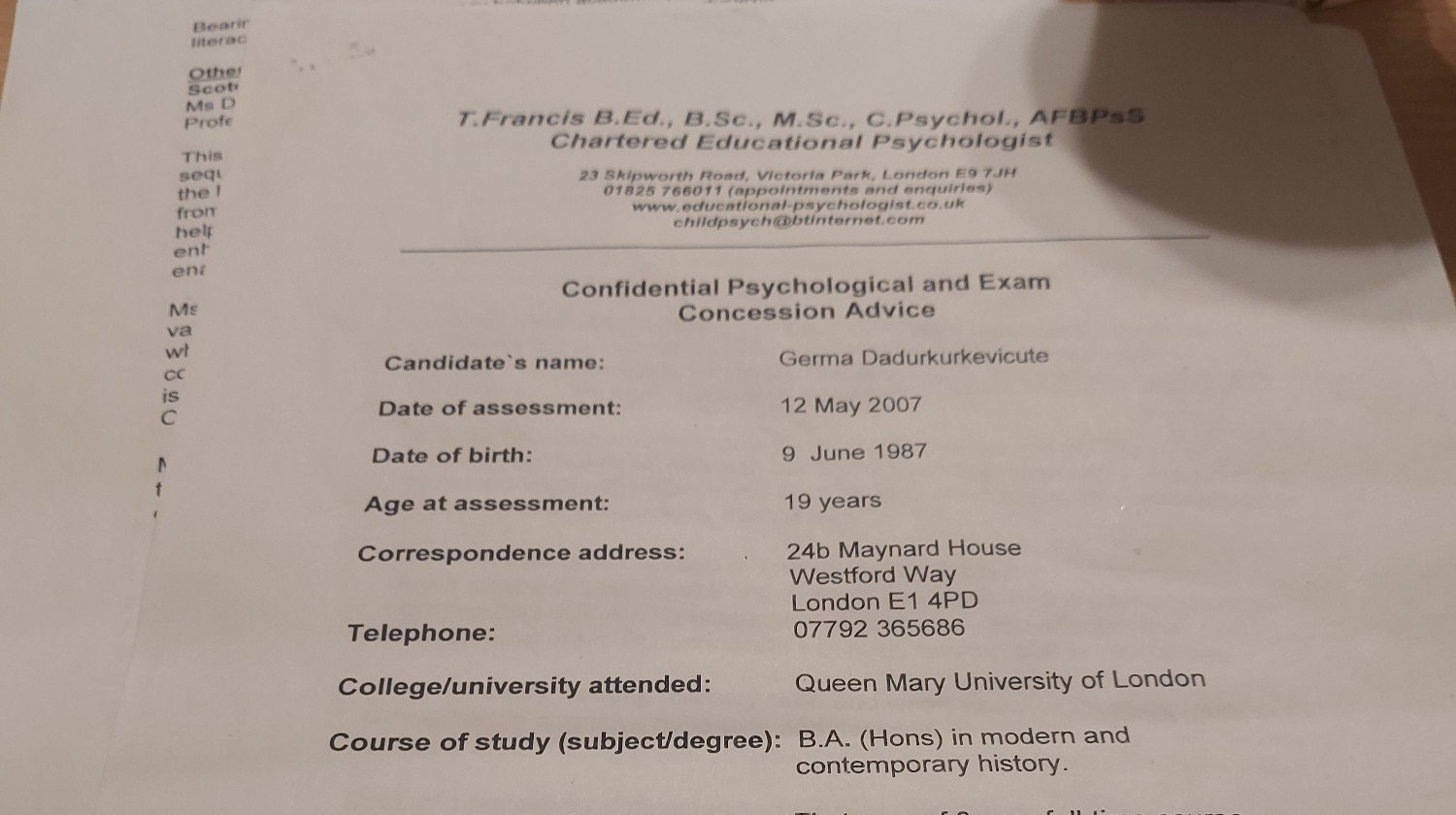
Hello, my name is Germa. I'm reaching out during one of the most difficult times of my life. I recently lost my job due to stress-related health issues while managing schizophrenia, dyslexia, and dyspraxia. In Lithuania's job market, where mental health conditions and learning disabilities carry deep stigma, finding new employment is proving extremely challenging. I have documentation from my GP and UK psychologists confirming my diagnoses (see attached documents and translation). I'm currently under psychiatric care and have been dealing with insomnia, stress, and fatigue that led to my job loss.
Before my recent burnout, I worked in education as a careers adviser and teaching assistant. I'm known for being patient, kind, and empathetic with students—qualities that made my work meaningful but also contributed to taking on too much during a particularly stressful period.
Finding work as a woman with disabilities in Lithuania is extremely challenging. The statistics tell the story: only 30% of working-age people with disabilities in our country are employed, despite thousands of open positions. Nearly half (45%) of companies required to meet disability employment quotas fail to do so, and people with disabilities make up 7.3% of all registered job seekers.
Medical history translation
The patient suffers from insomnia and increased tension at work. Complains of increased fatigue and lack of energy. The patient does not rest, feels excessive, increased weakness and fatigue. The patient is being monitored and treated by a psychiatrist. Medication has been prescribed, and a follow-up appointment with the psychiatrist is scheduled for January 14, 2026. Neurologist's conclusion: referred because of dyspraxia and dyslexia diagnosed in the UK in 2007, claims to have difficulty writing, difficulty performing certain movements, claims that when grasping an object - cannot hold it, claims to be "clumsy," needs to coordinate movements Examined at LSMU in 2011, but no data available Takes quetiapine and haloperidol - prescribed by psychiatrists, The patient claims to have had birth trauma, but no data is available. Neurologically: conscious, oriented, responsive, follows commands, understands. Speech is fluent. Pupils are symmetrical, photoreactive. The amplitude of eye ball movements is sufficient in all directions, Ny(-). Face is symmetrical. Tongue is in the midline. Function of other cranial nerves not impaired. Muscle strength 5 points in all muscle groups. Tendon reflexes (+) in arms and legs, no asymmetry. No pathological reflexes. PNM and KKM perform well. No sensory disturbances reported.
How to Help
You can donate through this 4fund campaign, or directly via:
- Bank transfer: LT687044060008255999
- PayPal: [email protected]
Every contribution, no matter the size, makes a meaningful difference.
Thank you for your support.