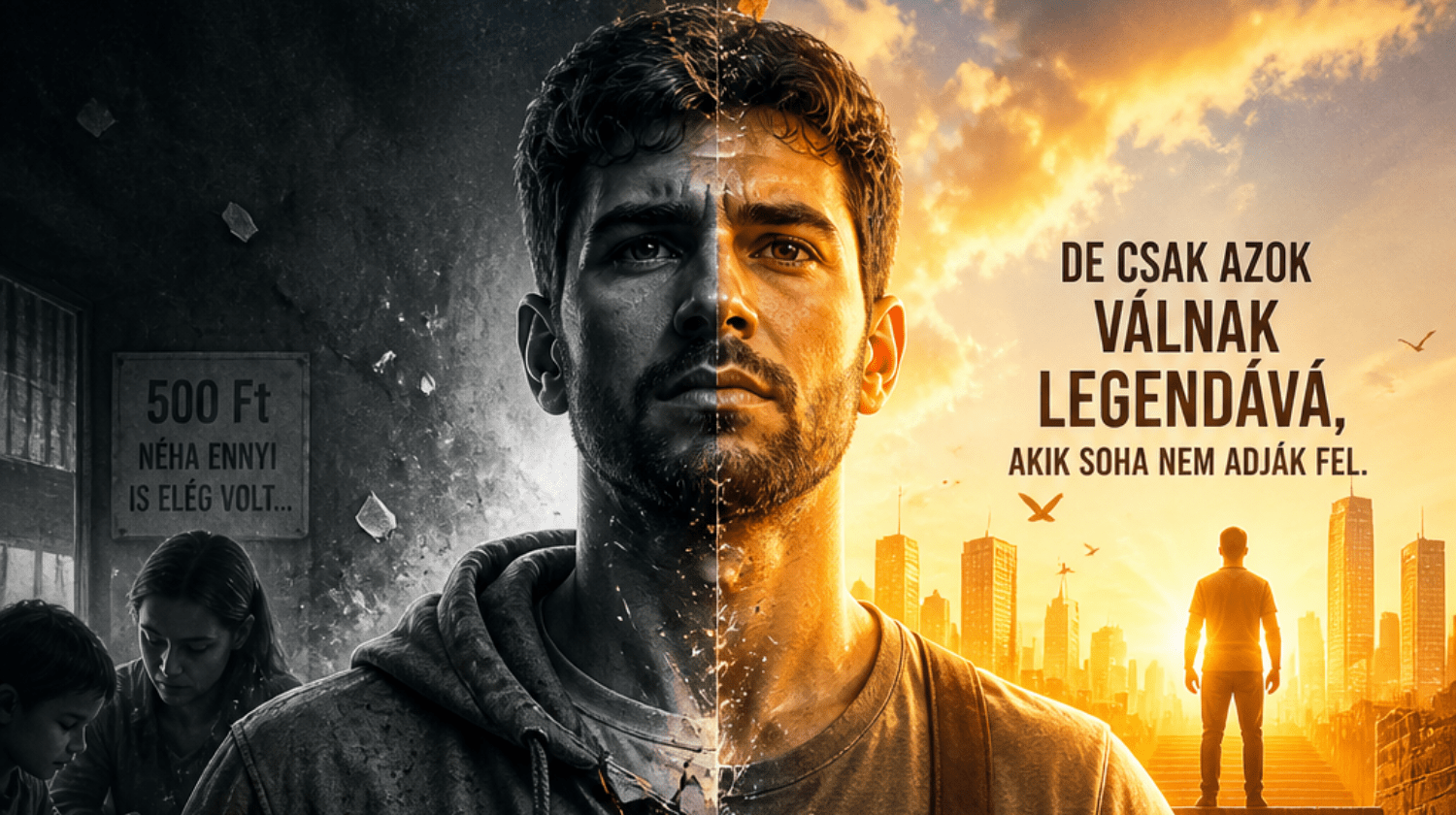
The World of Dániel Honfitárs.
The World of Dániel Honfitárs.
Original Hungarian text translated into English
Original Hungarian text translated into English
Description
Dániel was a young man full of hope and ambition, who always wanted to be more than what his circumstances had set out for him. Not because he was dissatisfied with life, but because deep down there was always a quiet, stubborn certainty burning within him: things could be different.
But life does not always move at the pace of dreams.
A difficult fate cast a shadow over him from an early age. A shadow that is not conspicuous, but is there on one’s shoulders every day. For him, the struggle was not a choice, but an everyday reality. He worked as a bricklayer with integrity, labouring hard, building others’ walls with his own two hands, whilst trying to somehow keep his own future together. He didn’t complain. He did his job. Because he had to.
But there were days when even work wasn’t enough. When opportunities were scarce and prospects even scarcer. When the question wasn’t what tomorrow would bring, but what would be on the table today.
In the hardest times, there were occasions when there wasn’t enough proper food. The shortage wasn’t just a theory, but a concrete, painful reality. An empty stomach that couldn’t be ignored. At times like that, you don’t philosophise, you just calculate: what can be left out so that there’s something left for others.
Even as a child, this reality was there.
He remembers when he and his sister would walk to the shop hand in hand. Not for fun, not for adventure — out of necessity. Their mother often asked for breakfast on credit, just so they wouldn’t sit at their desks at school on an empty stomach. This wasn’t a story back then, but everyday life.
On mornings like that, the decisions were simple, yet weighty.
His sister got a chocolate croissant. He got a sandwich.
And when there was no money left for a drink, the shopkeeper’s silence spoke louder than any words: “There’s not enough left in the 500 forints for that.”
Those words stayed with him.
They were etched into his memory. Deeper than anything else.
Because that was where she first truly understood what it means to be in need.
Not just that there isn’t enough — but also that every decision has a price.
And perhaps that was where something was born within him that he has never been able to let go of since:
that quiet, stubborn belief that it doesn’t have to stay this way forever. The aim isn’t to make things easier for Dániel.
The aim is that what was normal for him should one day no longer be normal.
That a child should not grow up believing that ‘500 forints’ is a wall that cannot be crossed.
That breakfast should not be a matter of credit, but a choice.
That “enough” isn’t a category of survival, but a starting point.
The goal is a simple but stubborn one:
to break that invisible rule that whoever starts at the bottom must stay there.
And yes — it may sound naive from the outside.
It might seem like too big a challenge.
But so did the idea that a bricklayer would ever build his own story with his own hands.
This campaign isn’t just about Dániel.
It’s about that moment when ‘you don’t stand a chance’ is rewritten to
you do have a chance.
The aim:
that Dániel’s story should not be a chapter about survival,
but the first proof that loss is not a death sentence.
And if this succeeds, it is not just one life that changes.
But also what we have hitherto believed to be the truth.